
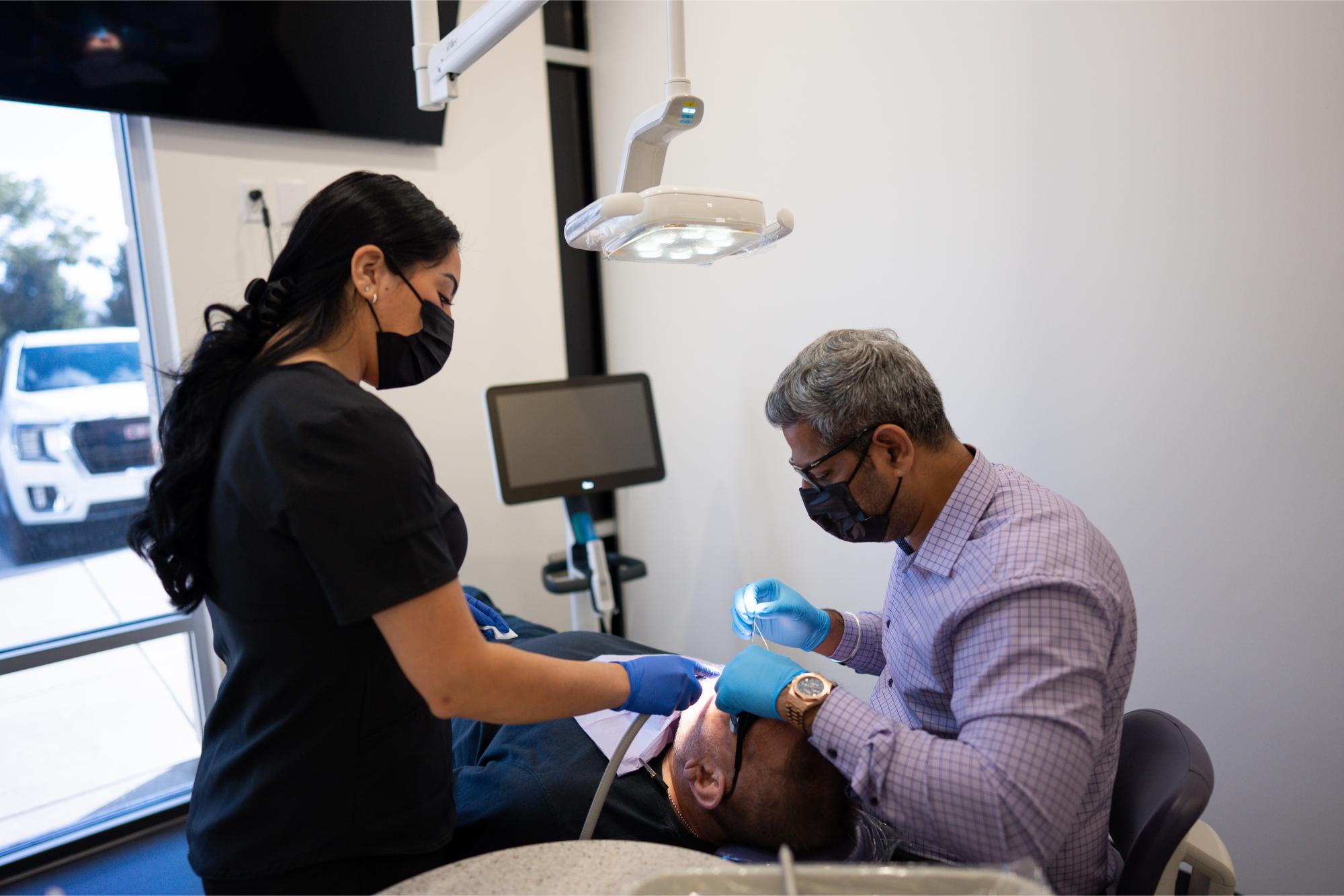
How Full Mouth Dental Implants Can Restore Your Smile in Gilroy
Losing several or all of your natural teeth can affect far more than your appearance. It can change the way you eat, speak, and feel about yourself in everyday situations. For many adults in Gilroy,full mouth dental implants have become a reliable way to replace missing teeth with a result that looks, feels, and functions […]
Losing several or all of your natural teeth can affect far more than your appearance. It can change the way you eat, speak, and feel about yourself in everyday situations. For many adults in Gilroy,full mouth dental implants have become a reliable way to replace missing teeth with a result that looks, feels, and functions much like natural teeth.
At Sunny Smiles Dentistry, we work with patients who are exploring their options for replacing multiple missing teeth or an entire arch. This guide walks through what full mouth implants are, how the process works, what to expect during recovery, and how to decide if this treatment is right for you.
What Are Full Mouth Dental Implants?
Full mouth dental implants, sometimes called whole mouth dental implants or complete dental implants, are a tooth replacement method that uses a set of implant posts placed in the jawbone to support a full arch of replacement teeth. Instead of replacing one tooth at a time, this approach addresses the entire upper or lower arch, or both, using a smaller number of strategically placed implants.
Unlike traditional dentures that rest on the gums, a full implant solution is anchored directly into the jawbone. This gives the replacement teeth more stability, which can make a noticeable difference in chewing ability and day to day comfort.
There are a few different approaches within this category, including full denture implants that snap onto a removable overdenture, and fixed full arch options where the replacement teeth are permanently attached to the implant posts. The right choice depends on factors like jawbone density, budget, and personal preference, which is why a thorough evaluation is an important first step.
Full Implant Teeth vs Traditional Dentures
Traditional dentures have been used for decades, but they come with some well-known drawbacks. They can shift while eating or speaking, may require adhesive, and do not stop the gradual bone loss that occurs after teeth are lost. Full implant teeth, on the other hand, stimulate the jawbone the way natural tooth roots do, which helps preserve bone structure over time.
At Sunny Smiles Dentistry, we help patients explore advanced tooth replacement options, including full-mouth dental implants, to achieve a more stable and natural-looking smile. Patients who switch from removable dentures to a full mouth of implants often describe a significant improvement in confidence, since there is no concern about the appliance moving during conversation or meals. Additionally, the long-term benefits of improved comfort, function, and jawbone preservation make dental implants a preferred solution for many individuals seeking lasting oral health and smile restoration.
Who Is a Candidate for Complete Dental Implants
Not everyone is automatically a candidate for full mouth implants, and that is exactly why a consultation matters. Generally, good candidates include people who:
- Are missing most or all of their teeth in one or both arches
- Have adequate jawbone density, or are willing to consider bone grafting
- Are in reasonably good general health
- Do not smoke heavily, or are willing to discuss how smoking may affect healing
- Want a long term solution rather than a removable one
For patients searching for whole mouth dental implants near me, the best next step is an exam that includes imaging of the jaw. This allows our team at Sunny Smiles Dentistry to assess bone volume and map out a treatment plan suited to your specific situation.
The Full Mouth Dental Implant Process
Understanding the process can make the decision to move forward feel less overwhelming. While every treatment plan is customized, most full mouth implant cases follow a similar sequence.
Step 1: Consultation and Imaging
The process begins with a comprehensive exam, including digital X-rays or a 3D scan. This helps determine how much bone is available and whether any preparatory procedures, such as bone grafting or tooth extractions, are needed first.
Step 2: Treatment Planning
Once imaging is complete, a treatment plan is developed that outlines the number and placement of implants, the type of restoration (removable overdenture or fixed bridge), and an estimated timeline.
Step 3: Implant Placement
During this stage, the implant posts are surgically placed into the jawbone. Depending on the case, a temporary set of teeth may be attached the same day, or patients may wear a temporary appliance while the implants heal.
Step 4: Healing and Osseointegration
The implants need time to fuse with the jawbone in a process called osseointegration. This typically takes a few months and is a critical step for long term stability.
Step 5: Final Restoration
Once healing is complete, the final full arch restoration is fitted and adjusted. This is when the permanent full implant teeth are secured, giving patients a functional and natural looking result.
Benefits of Full Mouth Implants
Choosing full mouth implants over other tooth replacement options offers several practical advantages:
- Improved chewing ability compared to removable dentures
- Better speech clarity since the appliance does not shift
- Preservation of jawbone structure through natural stimulation
- A more secure, permanent feeling compared to traditional dentures
- Long term durability with proper care and maintenance
While the upfront investment is higher than conventional dentures, many patients find that the durability and quality of life improvements make full implants dental treatment a worthwhile long term choice.
Comparing Tooth Replacement Options
The table below outlines how full mouth implants compare with other common tooth replacement solutions, to help you understand where this treatment fits among your choices.
| Feature | Traditional Dentures | Full Denture Implants (Removable) | Fixed Full Arch Implants |
|---|---|---|---|
| Stability | Can shift during use | Snaps securely onto implants | Permanently fixed in place |
| Bone preservation | Does not prevent bone loss | Helps slow bone loss | Helps slow bone loss |
| Daily care | Removed nightly, cleaned separately | Removable for cleaning | Cleaned in place like natural teeth |
| Chewing ability | Limited, especially with hard foods | Good improvement over dentures | Closest to natural chewing function |
| Typical longevity | 5 to 8 years, often needs relining | 10 to 20 years with care | Many years with proper maintenance |
| Initial cost | Lower | Moderate | Higher |
This comparison is general in nature. Your actual options and estimated costs will depend on your oral health, bone structure, and the specific plan recommended after an exam. If only a few teeth are damaged rather than missing, a dental crown may be a more suitable and conservative option than a full arch replacement.
What to Expect After Placement
Recovery after implant placement varies from person to person, but there are some general expectations that apply to most patients.
In the first few days, mild swelling and discomfort are common and can usually be managed with over the counter or prescribed pain relief. Most patients return to normal activities within a few days, though strenuous activity is typically discouraged for a short period.
Diet is adjusted during healing, starting with soft foods and gradually reintroducing firmer foods as comfort allows. Good oral hygiene remains important throughout the process, and our team will provide specific instructions for cleaning around the implant sites during healing.
Follow up visits allow us to monitor healing and confirm that osseointegration is progressing as expected before moving to the final restoration phase.
Caring for Your New Full Mouth Implants
Once your full mouth implants are complete, maintaining them is similar in many ways to caring for natural teeth, with a few additional considerations:
- Brush at least twice daily, paying attention to the gum line around the restoration
- Use recommended cleaning tools, such as a water flosser or interdental brushes, to clean under fixed bridges
- Attend regular dental checkups so we can monitor implant health and the surrounding gum tissue
- Avoid using your teeth to open packaging or bite excessively hard objects
- Let us know promptly if you notice looseness, discomfort, or changes in fit
With consistent care, full mouth implants can serve patients well for many years, making the maintenance routine an important part of protecting your investment.
Affordable Full Mouth Dental Implants in Gilroy
Cost is often one of the biggest questions patients have when considering this treatment. The total price of full mouth dental implants depends on several factors, including the number of implants needed, whether bone grafting is required, the type of final restoration chosen, and any necessary extractions beforehand.
We understand that patients searching for affordable full mouth dental implants near me want clarity on pricing before committing to treatment. During your consultation at Sunny Smiles Dentistry, we walk through the recommended treatment plan and provide a clear breakdown of costs, along with information on financing options that may be available to help make treatment more manageable.
If you are comparing dental implants Gilroy providers, we encourage you to ask about experience with full arch cases specifically, since this type of treatment requires a different level of planning compared to single tooth implants.
Why Choose Sunny Smiles Dentistry
As a dentist in Gilroy CA, Sunny Smiles Dentistry focuses on providing clear communication and personalized treatment planning for patients considering full mouth implants. We take the time to explain each stage of treatment, answer questions about the process, and help patients understand what outcome to realistically expect based on their individual oral health.
Whether you are exploring complete dental implants for the first time or comparing options after years of dealing with uncomfortable dentures, our team is available to walk you through the process step by step.
If you are considering full mouth dental implants and want to understand your options, our team at Sunny Smiles Dentistry is here to help. Contact us today to schedule a consultation and take the next step toward a healthier, more confident smile.
Frequently Asked Questions
1. How long does the full mouth dental implant process take?
The full process, from initial consultation through final restoration, often takes several months. This timeline accounts for healing and osseointegration, which is necessary for long term implant stability. Some cases allow for a temporary set of teeth to be placed the same day as surgery.
2. Are full mouth implants painful?
Most patients experience mild to moderate discomfort in the days following surgery, similar to what is expected after a tooth extraction. This is generally manageable with medication prescribed or recommended by our team.
3. Can I get full mouth implants if I have been told I have low bone density?
In many cases, yes. Bone grafting procedures can help build up the jawbone in preparation for implant placement. Your consultation will include imaging to assess whether grafting is recommended for your situation.
4. What is the difference between full denture implants and fixed full arch implants?
Full denture implants are removable and snap onto implant posts for added stability, while fixed full arch implants are permanently attached and function more like natural teeth. Both options improve on traditional dentures, but they differ in cost, maintenance, and daily use.
5. How do I know if full mouth implants are right for me?
The best way to determine candidacy is through a comprehensive exam that evaluates your remaining teeth, jawbone density, and overall oral health. This allows our team to recommend the option that best fits your needs and budget.
6. Do full mouth implants require special care compared to natural teeth?
Care is similar to natural teeth in terms of brushing and regular checkups, with some additional attention to cleaning around the implant and under any fixed restoration. We provide detailed care instructions once your treatment is complete.
Keep Reading


